


[Interview] 작곡가 김택수 인터뷰 “사람 냄새 나는 음악을 들려드리고 싶습니다”
2024.03.27
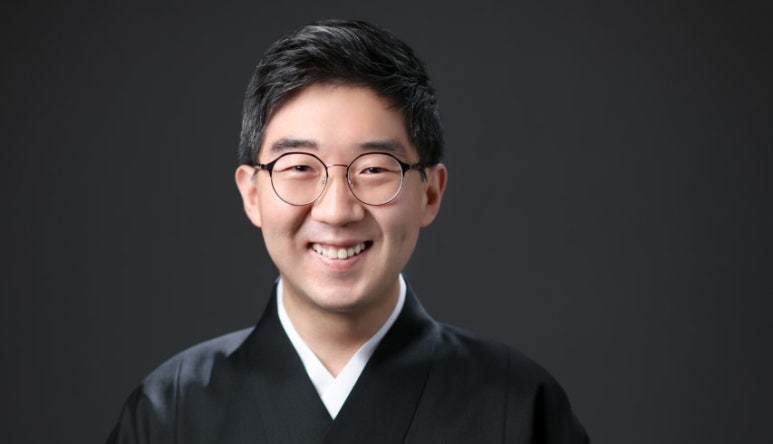
김택수, 작곡가
세종솔로이스츠는 올해 2024년, 창단 30주년을 맞이하여 다양한 이벤트를 준비하고 있습니다. 이번 뉴스레터에서는 오는 5월에 있을 ‘세종솔로이스츠 카네기홀 페스티벌’에서 세계 초연될 작품을 소개해 드리고자 합니다. 동시대 작곡가들과 지속적으로 작업을 해오고 있는 세종솔로이스츠는 이번 창단 30주년을 맞이하여 미국과 한국을 중심으로 활발하게 활동하고 있는, 우리 시대를 대표하는 젊은 작곡가인 김택수 작곡가에게 신작을 위촉했습니다. 오는 5월 22일 미국 카네기홀에서의 세계 초연과 8월 24일 예술의전당 콘서트홀에서의 아시아 초연을 앞두고 있는 세종솔로이스츠 위촉작 <with/out>, 과연 어떤 작품일까요? 보다 자세한 이야기를 들어보기 위해 작곡가와의 화상 인터뷰를 진행했습니다. ‘미국에서 활동하다 보면 세종솔로이스츠 출신 연주자들을 자주 만나게 된다’고 말문을 연 김택수 작곡가와 함께 세종솔로이스츠, 그리고 이번에 초연될 신작에 대한 이야기를 나눠보았습니다.
세종솔로이스츠와의 인연은 어떻게 시작되었나요?
팬데믹 동안 미국에서 한국 작곡가들에 대한 강의를 진행했었습니다. 어느 날은 작곡가 얼 킴(Earl Kim)에 대해 다룰 예정이었는데, 얼 킴에 대한 이야기를 함께 나눌 패널분을 섭외하는 과정에서 얼 킴의 작품에 관심을 가지고 계시고, 또 그에 대해 원고도 기고하셨던 세종솔로이스츠의 강경원 감독님이 떠올랐습니다. 그렇게 연락을 드려서 첫 만남이 성사되었습니다.
사실 그때는 아무 이야기가 없었는데, 재미있게도 이후 2021년 말 국립국악관현악단이 제 작품 둘을 초연했을 때 강경원 감독님을 다시 만나게 되었습니다. 공연이 끝난 후 차를 한 잔 마시면서 이야기를 하게 되었는데, 그 때 갑작스럽게 작품 위촉 이야기가 나왔습니다. 저는 전혀 예상하지 못했던 터라 놀란 상황이었는데, 감독님께서 구체적으로 네 대의 바이올린 협주곡을 부탁하고 싶다는 이야기를 하시더군요. 흔치 않은 편성이라 더 놀랐던 기억이 납니다.
신작 위촉을 받으신 후, 작품 구상 단계에서 특별히 고려하신 점이 있나요?
먼저 이 작품을 쓰기 이전에 세종솔로이스츠라는 단체에 대해서 알 필요가 있다고 생각했습니다. 그래서 강경원 감독님을 비롯, 이번 작품의 협연자로 참여하시는 연주자분들과 이야기를 나눌 수 있게 되었고 여러 가지 정보들을 얻을 수 있었습니다.
우선 인상적이었던 부분은 악단의 정체성이었습니다. ‘솔로이스츠’라는 명칭에서 알 수 있듯 세종솔로이스츠는 단순히 현악 오케스트라의 단원으로 연주에 참여하는 게 아닌, 단원 개개인이 솔리스트임을 강조하던 부분이 기억에 남았습니다. 단원들의 유대감이 매우 끈끈하다는 느낌도 받았고요. 반달형으로 빙 둘러서서 서로를 바라볼 수 있게 하는 연주 대형도 그렇고, 서로를 챙기는 방식에서 다른 단체들과는 다르게 다정하다는 느낌을 받게 되었습니다. ‘우리는 가족이다’라는 느낌을 이 정도로 공유하는 단체는 찾아보기 쉽지 않은데 말이죠.
이번 작품 <with/out>은 세종솔로이스츠의 30주년을 기념하는 작품이기도 하면서 무려 네 대의 바이올리니스트들이 솔리스트로 등장하는 작품입니다. 네 명의 바이올리니스트가 솔리스트로 등장하는 작품은 상상조차 힘든데요.
네 그렇죠. 편성도 그렇지만 이 곡을 연주하실 분들이 너무 화려한 이력을 자랑하는 분들이셔서 처음에는 걱정스러운 마음도 들었습니다. 어느 정도 경지에 오른 분들은 연주해 보면 이 작곡가가 어느 정도 수준으로 곡을 쓸 수 있는지 바로 아시거든요. 그런 면에서 이번 작업이 작곡가로서의 저를 시험하는 느낌 또한 들었습니다. 실제로 이번에 솔리스트로 연주하시게 될 프랭크 황 선생님은 ‘어렵게 들리되 연주하기 어렵지 않게 써달라’고 하셨는데요. 흥미롭게도 부담이 너무 커지다 보니 나중에 가서는 ‘그냥 하고 싶은 걸 하자, 내가 가지고 있는 주제 의식을 선명하게 드러내는 쪽으로 가보자’라고 자연스럽게 생각이 흘러가게 되었습니다.
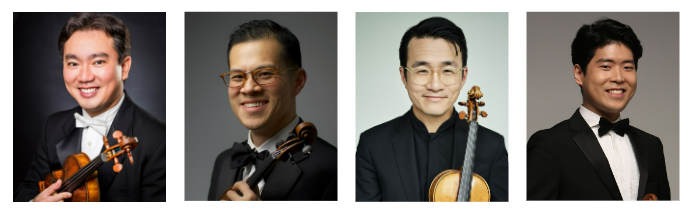
* 이 곡은 세종솔로이스츠 출신 네 명의 악장 (왼쪽부터 뉴욕필 악장 프랭크 황, 메트로폴리탄 오페라 오케스트라 악장 데이비드 챈, 몬트리올 심포니 악장 앤드류 완, 함부르크 필하모닉 오케스트라 악장 다니엘엘 조) 이 협연자로 나서 세계 초연과 아시아 초연을 하게 된다.
그렇다면 어떤 주제 의식을 담고 싶으셨나요?
이 작품을 설명하면서 다른 매체에서는 ‘군중 속의 고독’이라는 말을 인용했지만, 보다 정확히 말하면 소셜미디어 시대에서의 고독이라고 표현하는 게 더 좋을 거 같아요. 예를 들면 이 작품에서 독주자 개개인이 가진 캐릭터가 있습니다. 서로가 다른 이야기를 하는 가운데, 2번 바이올린 독주자는 ‘나는 언제 주목을 받을 수 있을까?’ 같은 생각을 하는거죠.
앞서 말한대로 우리가 사실 소셜미디어를 통해서 다른 사람들과 소통은 하고 있지만 직접 얼굴을 맞대지 않고 각자의 공간에서, 단절된 상황에서 소통을 하고 있는 거잖아요. 물론 이 작품에는 (협주곡이라는 장르에서 기대할 법한) 화려한 장면도 없지는 않지만, 개인적으로 음악적인 화려함보다는 우리가 맺고 있는 관계에 대해 생각해보고 싶었습니다. 작품의 제목이 ‘with/out’이잖아요? 무언가를 함께 한다는 것의 이면에는 외로움 또한 존재하고요. 특히 팬데믹을 거치면서 우리가 외로움이라는 감정을 특히 많이 느끼기도 했기에, 개인적으로 상황이 서서히 풀리기 시작하면서 다시금 소통할 수 있다는 사실이 무척 기뻤습니다. 그래서 이번 작품에서는 너무 복잡하지 않은 선에서 4대의 바이올린이 활약할 수 있는 음악적인 공간을 만들고, 그 안에서 들려드리고 싶은 이야기를 만드는 데에 집중하고 싶었습니다.
음악적으로 <with/out>, 어떤 작품인가요?
우선 구성에 대해 말씀드리자면 이번 <with/out>은 바로크 시대 작품이나 고전, 낭만의 협주곡과도 상당히 다릅니다. 바이올린 네 대를 위한 협주곡은 제가 알기로는 비발디의 작품을 제외하고는(RV 580) 없는 걸로 알고 있고, 다른 시대의 작품들 또한 우리가 살고 있는 시대와는 맞지 않는 느낌이 들어서 그다지 참고할 만한 것들이 있지는 않았습니다. 그래서 앞서 말씀드린 대로 저만의 방식으로 가는 방향으로 작업을 진행했습니다.
1악장(lonesome and fluorescent)에서는 외로움을 담고 싶었습니다. 보다 구체적으로는 도시의 외로움이라고 할 수 있겠는데요. 작업을 진행하면서 작가 아드리아나 나베(Adriana Naveh)의 <도시(Urban)>라는 연작에서 영감을 받았습니다. 개개인이 작은 공간에 머무르는 도시의 분위기를 이 작품이 잘 묘사하고 있다는 생각이 들더라고요. 또 도시의 야경이라 하면 미니멀리즘 음악과 잘 맞아 떨어지는 느낌이 있어 첫 악장의 도입부도 그렇게 진행이 됩니다. 독주자 한 사람은 반주를 하고, 또 한 사람은 혼잣말같은 독주를 한동안 진행하며 감정의 미묘한 변화를 보여줍니다. 그러다가 자신뿐만이 아니라 옆에서도 비슷한 이야기를 하고 있다는 사실을 알게 되고, 그렇게 서로의 감정이 서서히 고조되다가 나중에는 폭발하게 되는거죠. 그러다가 반주를 맡았던 연주자가 뒤에는 작품을 이끌고 가게 되기도 하고요.
이어지는 2악장(subdued and imploding)에서는 두 가지 이야기를 하고 싶었어요. 미국에서 살다 보니 동아시아 사람들이 상대적으로 전체주의적인 모습을 보일 때가 종종 있거든요. 그런 부분을 음악으로 이야기해 보고 싶어서 2악장의 도입부에서는 네 명의 솔리스트가 모두 투티로 시작합니다. 그렇게 자아를 죽여야 하는 상황에서 한 명씩 각자의 이야기를 시작하는 과정을 중간 악장에서 그려보고 싶었습니다. 그 뒤로는 네 명의 솔로이스트가 집단 독백을 하는 듯한 카덴차가 등장합니다. 작년 8월 몬트리올에서 프랑스 예술가 릴리 레노 드와르(Lili Reynaud Dewar)의 비디오 아트 전시를 볼 일이 있었습니다. 네 개의 벽에서 서로 다른 인터뷰들이 여러 언어로 흘러나오는 영상이었는데, 각각의 스크린에서 말을 하는 서로 다른 화자들이 어느 순간 같은 맥락의 이야기를 할 때가 있더라고요. 그렇게 서로의 이야기가 맞아 떨어지는 순간을 이 악장에서 구현해보고 싶었습니다.
그리고 마지막 3악장(festive!!)은 전형적인 피날레입니다. 악장 초엽에 스트라빈스키의 <바이올린 협주곡>에서 나오는 코드를 인용했는데요, 스트라빈스키와 그 곡을 위촉, 초연한 바이올리니스트 사무엘 두쉬킨 (Samuel Dushkin)의 우정이 그 코드가 만들어지는데 한 몫 했다는 점, 그리고 그 소리가 사람들이 동창회에서 반가움에 ‘와~’하고 뛰어오는 듯한 느낌을 준다는 점에서 착안했습니다. 마지막 악장에서는 ‘축제’라는 부제에 걸맞게 코즈모폴리턴한 선술집을 생각하면서 써서 국악적인 장단도 나오고 빅밴드 스타일의 코드들도 나오고 합니다. 세종솔로이스츠라는 악단의 30주년을 기념하는 느낌이 잘 전달되면 좋겠습니다.
아직 선생님께서도 이 작품이 직접 연주되는 걸 들어보지 않은 상황이셔서 더욱 기대가 되실 것 같은데요. 신작 감상을 위해 뉴욕, 서울의 공연장에 찾아와 주실 분들에게 전하는 말씀 부탁드리겠습니다.
이 질문 앞에서 많은 생각을 해보았는데요. 결국에는 사람 냄새 나는 공연이 되었으면 좋겠습니다. 이 작품을 연주하시는 분들 모두 너무나 훌륭한 아티스트이지만 음악을 만들어 나가는 과정은 결국 사람과 사람이 만나야 비로소 이루어진다고 생각을 하거든요. 그리고 연주자분들은 물론, 우리 또한 팬데믹을 거쳐 오면서 외로움의 전문가가 되기도 했고요. 이번 연주회에서는 그런 감각들이 잘 모여서 함께 한다는 느낌이 나는 공연이 되었으면 합니다.
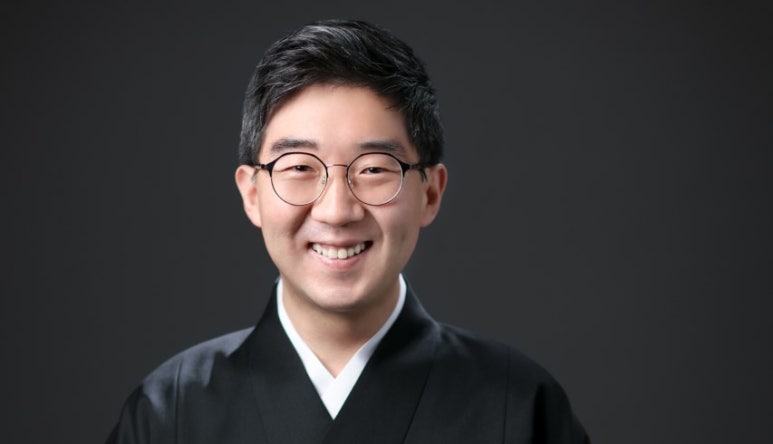
Texu Kim, composer
Sejong Soloists is celebrating its 30th anniversary in 2024, and we are preparing for a variety of events. In this newsletter, we would like to introduce you to a work that will have its world premiere at the ‘Sejong Soloists Carnegie Hall Festival’ in May. Continuing its collaboration with contemporary composers, Sejong Soloists has commissioned a new work from Texu Kim, a young composer active in both the United States and Korea. With its world premiere at Carnegie Hall on May 22 and its Asian premiere at the Seoul Arts Center Concert Hall on August 24, what can we expect from this Sejong Soloists commission? To find out more, we conducted a video interview with the composer, to talk about the Sejong Soloists, his new work, and its upcoming premiere.
How did your relationship with the Sejong Soloists begin?
During the pandemic, I was lecturing on Korean composers in the United States. On one day, I was going to talk about composer Earl Kim. When I was looking for a panelist to talk about him, I remembered that Kyung Kang, creative and executive director of Sejong Soloists, was interested in Earl Kim's work and had written an article about him. I reached out to her, and that's how we met.
In fact, we didn't talk about the commission then, but I met her again in late 2021 when the National Orchestra of Korea premiered two of my works. After the performance, we had time for tea and conversation, and the subject of commissioning a work came up out of the blue. I was surprised because I didn't expect it at all, but she told me that she wanted to commission a concerto specifically for four violins. I remember being even more surprised because it was an unusual instrumentation.
What kind of work is it?
Before writing the piece, I thought I needed to know more about the Sejong Soloists organization. I was able to talk further with the director, Kyung Kang, and also with the performers who are participating in the piece.
The first thing that impressed me was the identity of the orchestra. As the name "Soloists" suggests, Sejong Soloists emphasizes that each member of the orchestra is a soloist, not just a member of the string orchestra. I also felt that the bond between the members was very strong. The formation of the orchestra, which is a half-moon shape so that they can look at each other, and the way they take care of each other is so affectionate, unlike what is seen in other organizations. 'We are a family' is a feeling that I felt.
This work with/out celebrates the 30th anniversary of Sejong Soloists and features four violinists as soloists. It's hard to imagine a work with four violinists as soloists.
Yes, that's right, not only the composition, but the people who will be playing this piece have such a colorful history, so I was worried at first. When you play with people who have reached a certain level, they immediately perceive a composer's level of skill, and in that sense, I also felt that this work was a test for me as a composer. In fact, one of the soloists suggested, "Write something that sounds difficult but is not difficult to play," and interestingly enough, the pressure became so great that later on, I thought, "Let's just do what I want to do, and let's go for something that clearly reveals my thematic consciousness."
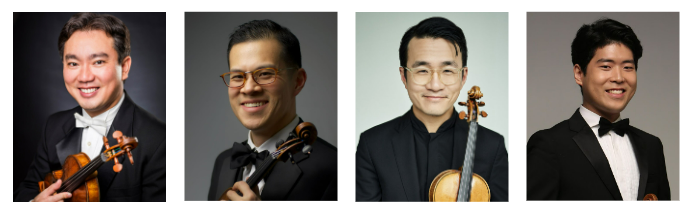
* The piece will have its world and Asian premieres with four Sejong Soloists alumni (Frank Huang, New York Philharmonic; David Chan, Metropolitan Opera Orchestra; Andrew Wan, Montreal Symphony; and Daniel Cho, Hamburg Philharmonic Orchestra).
What kind of thematic consciousness were you trying to capture?
In describing this piece, I have used the phrase "loneliness in a crowd" in other media, but I think it might be better to say "loneliness in the age of social media." For example, each soloist in this piece has a character. They're all talking about different things, and the second violin soloist is thinking, "When am I going to get noticed?"
As I mentioned earlier, we're actually communicating with each other through social media, but we're not face-to-face; we're communicating in our own space, in a disconnected situation. Of course, the piece is not without its spectacular moments (as you would expect from a concerto), but I personally wanted to think about the relationships we have rather than the musical spectacle. The title of the piece is with/out, right? The flip side of being together is loneliness, and I think we've been feeling that a lot, especially during the pandemic. I've personally been really happy to be able to communicate again as things are slowly starting to unwind. So for this piece, I wanted to focus on creating a musical space for the four violins to play in, as well as telling the story I wanted to tell within that space.
Musically, what is with/out like?
First of all, let's talk about the composition. This concerto is quite different from the Baroque, Classical, and Romantic concertos. As far as I know, there are no concertos for four violins except for Vivaldi's (RV 580), and works from other eras don't seem to fit the times we live in, so I didn't have much to refer to. So, as I mentioned earlier, I went my own way.
In the first movement ("lonesome and fluorescent"), I wanted to capture loneliness. As I was working on it, I was inspired by a series called Urban by the artist Adriana Naveh. I thought it really captured the atmosphere of the city, where individuals are confined to a small space, and I think it lends itself well to minimalist music, so that's how the first movement opens. One of the soloists is accompanied by the other, and the other soloist plays a monologue-like solo for a while, showing subtle changes in emotion. Then they realize that they're not the only ones talking about loneliness, but the person next to them is also talking about it, and their emotions slowly escalate and then explode. After that, the person who was accompanying them takes over and leads the piece.
In the second movement ("subdued and imploding"), I wanted to tell two stories, because having lived in two somewhat different cultures, I often sense tension between a relative freedom of expression and a more authoritarian approach, and I wanted to talk about that in music. So in the introduction of the second movement, all four soloists start with a tutti, and I wanted to depict the process of one by one starting to tell their own stories in a situation where they have to suppress their ego. Following that, there's a cadenza where the four soloists have a group monologue. In August of last year, I was in Montreal and saw an exhibition of video art by French artist Lili Reynaud-Dewar. It was a video of different interviews playing on four walls in different languages. I noticed that at some point the different speakers on each screen were talking about the same thing, and in this movement, I wanted to embody that moment where their stories align.
The final movement ("festive!!") is the quintessential finale. At the beginning of the movement, I quoted a chord from Stravinsky's Violin Concerto, which was inspired by the friendship between Stravinsky and violinist Samuel Dushkin, who premiered the piece; the chord is reminiscent of the sound of people jumping up and down with joy at a reunion. I wrote the last movement while thinking of a cosmopolitan tavern, with some Korean folk music and big band-style chords. I hope it conveys the feeling of celebrating the 30th anniversary of the Sejong Soloists.
Since you haven't heard the piece performed in person yet, I'm sure you're looking forward to it even more. What would you like to say to those who will come to the New York and Seoul venues to hear your new work?
I've been thinking a lot about this question, and in the end, I want it to be a performance that evokes the scent of people, because I think all of the people who are performing this piece are amazing artists. I think the process of making music is really about human interaction (not only the performers), but we've also become experts in loneliness through the pandemic, and I want the performance to bring those senses together.
*Translated from the Korean interview

